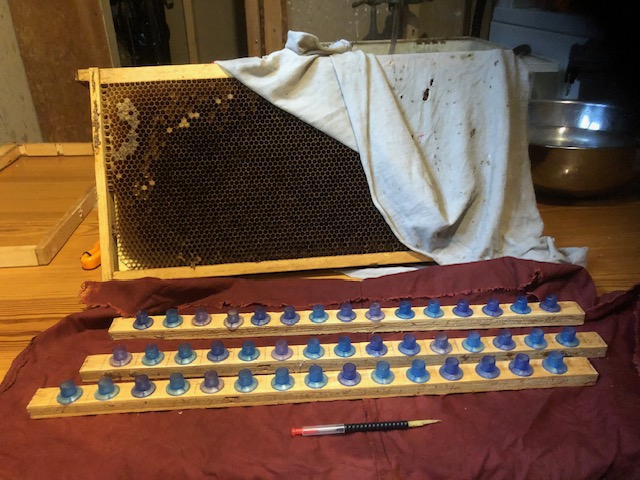
Queen Cells
Local Pickup
If you buy a cell, she hatches and flies out to mate with the drones in your local area. That means your new queen is bred with genetics already adapted to your region—a good fit for beekeepers who want to strengthen their stock with local drone diversity while introducing our selected maternal lines. She’ll typically begin laying within 10–14 days once she’s mated and accepted by the colony.
Inquire
Inquire for availabilityLocal PickupCost-EffectiveHigh Acceptance
Benefits
- —Cost-effective way to introduce genetics.
- —Brood break: because a queen cell takes time to hatch, go on mating flights, and begin laying, there's a natural gap in the hive's brood cycle (about 10–14 days).
- —10–14 days until laying eggs.
- —High acceptance.
Things to consider
- ·Queen cells are fragile. They cannot be shipped easily via standard mail; you usually have to pick them up from a local breeder and transport them in a warm, padded container (like a battery-operated incubator or a specialized thermos).
- ·Risk that she gets eaten by a bird or lost during her mating flight—a risk you don't take with a pre-mated queen.
- ·Bad mating weather: a queen cell requires you to wait for the queen to hatch, survive her mating flights, and begin laying. This can take up to two weeks, and if she fails to return from her flight, the hive is in trouble.
Also in Our Bees
Breeding Standards
Our queens are selected for winter hardiness, gentle temperament, and consistent laying performance in Ottawa Valley conditions.
Read our breeding standards →